Some coffee aficionados say the mark of a good espresso shot is the layer of crema that sits on top — you know, those velvety light brown bubbles that sit atop the rich, strong, freshly-brewed joe.
Don’t think you have to have a commercial espresso machine at your disposal to wind up with the flavorful froth, though. If you’ve got one of the other coffee makers that produce espresso or espresso-style coffee — like a Moka pot, for instance — you can still create lovely layers of crema.
Get a FREE first bag of coffee from our friends at Atlas Coffee Club when you subscribe. Enter your email to get the deal.
What’s a Moka pot, and how does it work?
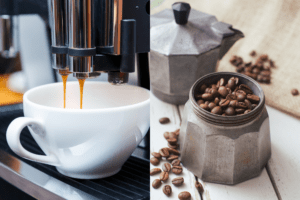
The Moka pot brewer was born in Italy and consists of three parts: a lower compartment that holds water, a funnel-shaped coffee basket, and an upper chamber that collects the brewed coffee.
When the Moka pot touches a heat source, like the burner on an electric or gas stove, steam pressure pushes water up the funnel and through the coffee grounds, resulting in an upper chamber full of rich espresso-like joe.
Does a Moka pot brew espresso?
The Specialty Coffee Association’s (SCA) standards state that, for coffee to be considered espresso, it must have been brewed with at least nine bars of pressure. Since the Moka pot brewing method doesn’t use that much pressure, the resulting joe isn’t technically real espresso.
It is, however, a delightful substitute that works just as well in any espresso beverage, from more classic coffee drinks like the latte to spunkier choices like the cortado.
Want to purchase a Moka pot of your own? Check out our buying guide here and take a closer look at some of our favorite products on the stovetop espresso maker market.
What is crema?
Roasty has an article explaining crema in great detail you can check out here, but if you aren’t in the mood to read more content, here’s the short explanation: crema is that blanket of golden-brown foam that crowns shots of espresso.
Though crema is thin and short-lived, only making up around a tenth of the espresso shot and lingering for about two minutes, it makes a big impression; some espresso lovers think anything lacking crema isn’t even worth drinking!
Can you make crema in a Moka pot?
Many fans of espresso swear crema are only worthwhile if it comes from a high-quality espresso maker, but let’s be realistic here: not everyone can afford the fancy machines used in coffee shops.
But the good news is, you don’t need one of those brewers to produce crema-topped coffee. An at-home barista can get the stuff from a Moka pot so long as they keep the following factors in mind.
Roast Date
The roast date of your coffee beans makes a difference any time you brew a cup of coffee. Fresher beans not only make better-tasting cups of coffee; they also make a more delicious shot of espresso with crema.
When you roast coffee beans, you release the flavorful oils that make your cup of espresso taste and smell good. If you use joe one to two weeks after its roast date, the crema on top of the brew will become more stable.
Roast Level
The roast level of your coffee grounds also plays a role in creating crema. An espresso shot made with lightly roasted beans boasts the best crema, as most of the coffee’s oils are still intact by the time it is brewed.
Generally, the darker the roast of coffee, the less crema it will produce. This is because a dark roast coffee bean releases more carbon dioxide than a lighter one does, and anything that lessens coffee’s CO2 content actively works against crema creation.
Water Temperature
Using water that’s the correct temperature is one of the primary keys to making quality coffee or espresso, so you shouldn’t be surprised that it plays a role in whether or not crema forms on your morning espresso or espresso-style coffee, too.
Though you’ll need to get the water hot enough to produce enough pressure to brew the coffee, it shouldn’t be boiling. Scalding hot water can quickly dash your dreams of making good-quality coffee or espresso.
Using medium heat during the extraction process, on the other hand, draws the coffee oils out more slowly.
Do Not Tamp Moka Coffee
Tamping belongs to espresso-machine preparation, not this Moka pot method. Fill the funnel loosely with coffee ground for a Moka pot, level it without pressing, and keep the rim clear. Bialetti explicitly says not to press the coffee down. Never compact the grounds or use an extra-fine espresso grind in an attempt to force more pressure or foam.
Pressure
Creating decent crema on top of a cup of espresso requires close to nine bars of pressure. Since a Moka pot only uses around one and a half to two bars of water pressure, the froth that appears atop your smooth coffee won’t technically be crema; it’ll simply be reminiscent of the stuff.
While that may be unacceptable to the most serious espresso enthusiasts, it’s a decent substitute for those who don’t mind settling for close enough.
How to Make Crema with a Moka Pot
Step One
Fill the lower portion of the Moka pot with hot — not boiling! — water. Don’t overfill; the water level should stay below the safety valve.
Step Two
Fill the filter basket loosely with coffee ground for a Moka pot. Level the grounds without pressing or tamping, clear the rim, and reassemble the brewer according to its instructions. Do not use an extra-fine espresso grind to chase foam.
Step Three
Put the Moka pot on the stove over medium heat. Leave the lid open and watch the brewing machine very closely.
Step Four
Soon, a steady stream of delicious coffee will flow. The initial java stream will be dark brown; you’ll want to let it brew until it’s a light, almost honey-colored hue.
Step Five
When the coffee reaches the desired shade of light brown (or the upper chamber is around 80 percent filled), remove the Moka pot from the heat and wrap the bottom of it with a cold water-soaked towel.
You shouldn’t skip this step; quickly cooling the brewer keeps it from producing over-extracted, bitter coffee.
Step Six
Enjoy your fresh Moka coffee. You may see some brief surface foam, but it is not the same as espresso crema and is not guaranteed.
Keep in Mind…
- Do not tamp the grounds, even lightly. A Moka pot is not an espresso machine, and any brief surface foam is not a reason to restrict the flow of water or increase pressure. Follow your model’s fill limits and keep its safety valve unobstructed.
Brewing perfect coffee with a Moka pot takes some practice, so don’t be disappointed if you don’t end up with anything that resembles crema on your first few attempts.
To Sum It Up
A Moka pot can sometimes produce brief surface foam, but it does not make the same crema as an espresso machine. Aim for a good-tasting brew rather than forcing the pot to produce foam.
However, a decent espresso machine can be pretty pricey, so if the Moka pot is your only option for brewing something a lot like authentic espresso, you’ll have to be patient if crema creation is your goal.
Happy Caffeinating!